Comparison
Hardwood vs engineered flooring: how construction shapes the choice
Both solid hardwood and engineered wood floors show a real wood surface, and once installed they can be hard to tell apart by eye. The difference sits underneath. That structural difference is what decides where each one belongs, how it survives a dry Prairie winter or a humid summer near the Great Lakes, and how many times it can be brought back to new.
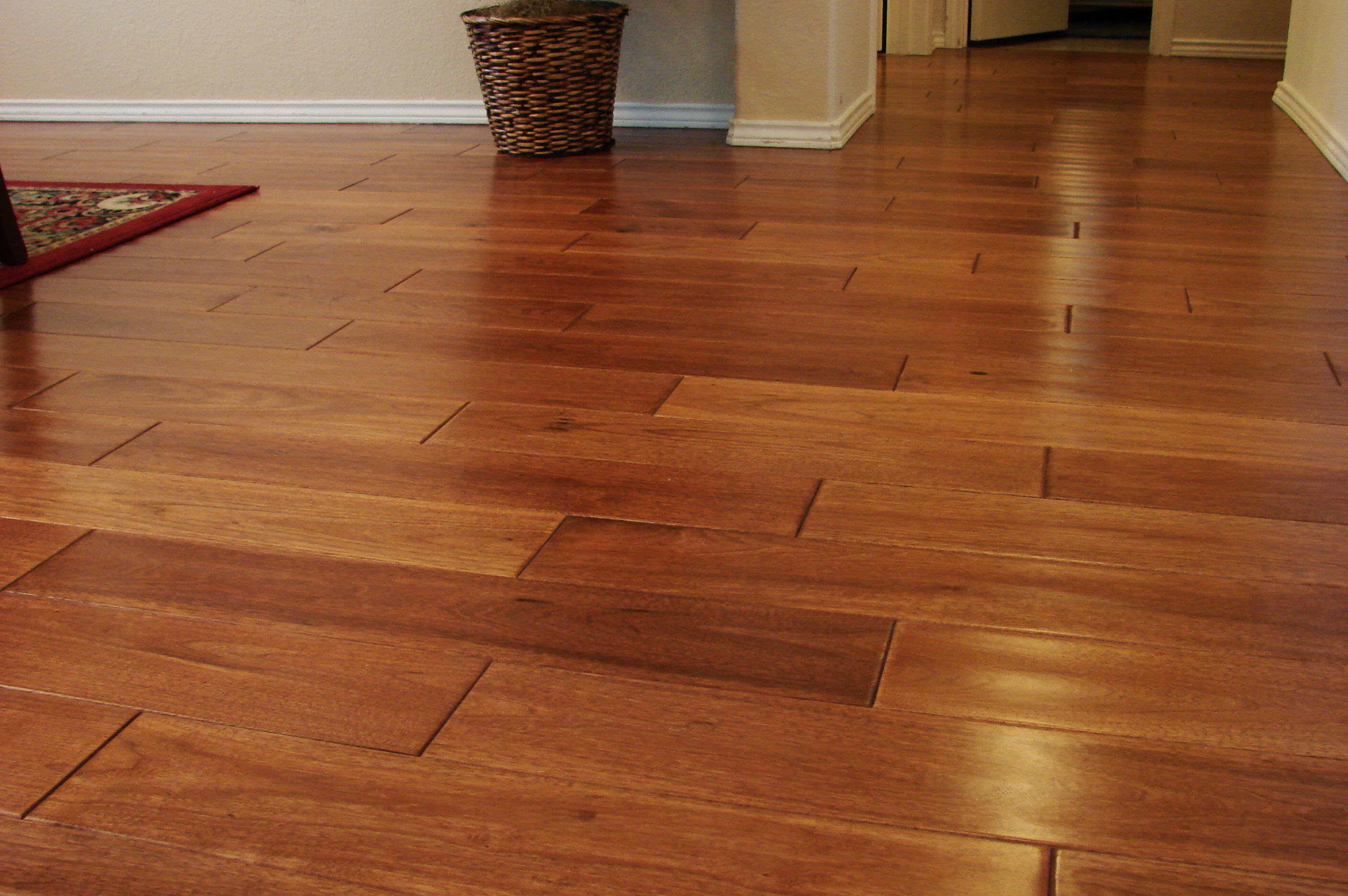
What solid hardwood actually is
A solid hardwood board is milled from one piece of wood, typically around three-quarters of an inch thick, with a tongue-and-groove edge. Because it is wood all the way through, it can be sanded back to bare timber and refinished several times over its life. That same all-wood body is also why it moves: as the air around it gains or loses moisture, the board swells and shrinks across its width.
Common North American species for solid flooring include red oak, white oak, maple, and hickory. They differ in hardness and in how they take stain, but they share the same basic behaviour around moisture.
What engineered wood adds
An engineered board is a sandwich. The top is a genuine hardwood wear layer; below it sit several plies of wood glued with their grain directions alternating. That cross-laminated core resists the seasonal expansion that a solid board cannot, because each ply restrains its neighbours. The visible surface is still real wood, so the finished look is the same; the stability is what changes.

Where each one belongs
The single most useful rule is to match the floor to the subfloor and the grade level.
- Above grade, over a wood subfloor: solid hardwood is at home here, nailed or stapled down.
- On or below grade, over concrete: engineered planks are the safer default because they tolerate the moisture and movement that come with a slab.
- Over in-floor radiant heat: engineered construction generally handles the temperature cycling better, though you should always follow the specific product’s guidance.
Practical note
A basement and a second-floor bedroom can call for different floors in the same house. It is common to run engineered planks downstairs over the slab and solid hardwood on the upper levels.
Cost over time, not just at purchase
Sticker price is only part of the picture. A thick solid floor and a thick-wear-layer engineered floor can both be refinished, which spreads their cost over decades. A thin engineered veneer cannot be sanded the same way, so when its surface wears through, replacement rather than refinishing is the path forward. When comparing quotes, it is worth asking about wear-layer thickness rather than only the headline price.
A simple way to weigh the wear layer
What does not separate them
Appearance is not a reliable way to choose. Both can be finished matte or glossy, wire-brushed or smooth, and in a wide range of stains. The decision is better grounded in where the floor sits and how the building is heated and cooled than in how a sample looks in a showroom.