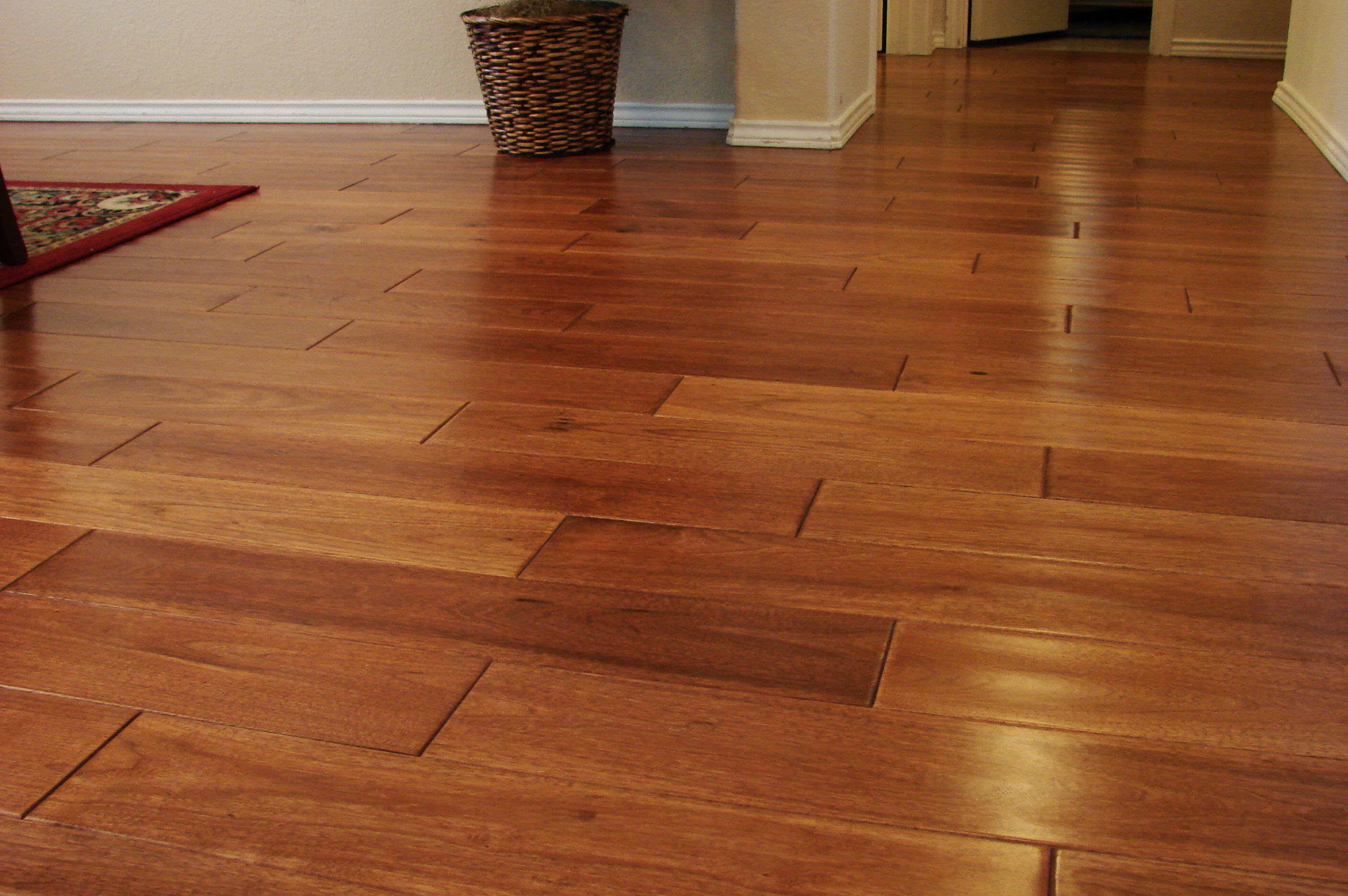
Where does it sit?
Solid hardwood is nailed to a wood subfloor above grade. Over a concrete slab or a basement, engineered planks installed floating or glued are the more forgiving choice.
Flooring notes · Canada
A reference on how solid hardwood and engineered wood floors behave through cold winters, dry heating seasons, and humid summers — and what that means for selection, installation, and upkeep.
Start here
Before species or finish, the floor that lasts is usually the one matched to its subfloor and the way the room is heated and cooled.
Solid hardwood is nailed to a wood subfloor above grade. Over a concrete slab or a basement, engineered planks installed floating or glued are the more forgiving choice.
Forced-air heating can pull indoor relative humidity below 30% in a Canadian January. Wide solid boards react to that swing more than narrow boards or engineered cores.
Thick solid wood and thick-wear-layer engineered floors can both be sanded and refinished. Thin veneers cannot, which changes the long-term cost picture.
Solid hardwood
Engineered wood
Quick reference
| Property | Solid hardwood | Engineered wood |
|---|---|---|
| Typical thickness | About 3/4" | About 3/8" to 3/4" |
| Below-grade installs | Generally not recommended | Commonly suitable |
| Reaction to humidity swings | More movement across width | Less movement |
| Refinishing | Multiple times | Depends on wear-layer thickness |
| Common install methods | Nail or staple down | Float, glue, or nail |
Contact
Have a subfloor, climate, or maintenance question? Use the form below. This is a static editorial site, so the form runs entirely in your browser and does not transmit data.